






How Can You Tell If You Need an Oil Change?
We spend a significant amount of time in our cars. According to a 2019 study , the average American spends close to 11 hours a week in their car. Given the amount of money you’ll spend buying and maintaining your car and the time you’ll spend in it, you should do everything you can to ensure it runs as smoothly as possible, for as long as possible. Even if you opt for a pre-owned vehicle, it’s still a significant outlay.
Regular oil changes are one of the most vital services you need to maintain your vehicle’s health. Oil changes are essential to any vehicle’s performance because this lubricating liquid is a crucial component of a properly functioning engine. Clean, high-quality oil protects the engine’s parts, sustaining its performance and extending its life. But, over time, this oil breaks down or becomes dirty, making it more challenging for your engine to perform its crucial functions.
Luckily, getting an oil change is typically an easy and quick procedure. It’s not always practical to schedule your vehicle’s oil change by the time and mileage suggestions in your owners manual, but you can get a sense for when it needs a checkup. Here are nine signs that your vehicle needs an oil change :
The Check Engine or Oil Change Light
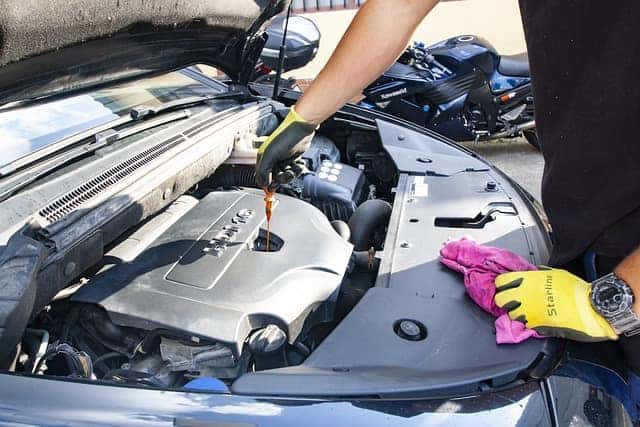
The first warning on this list is also the most obvious. If your check engine light or oil change light activates on your dashboard, your car is telling you it’s time to change your oil. You can manually check your oil via your dipstick to see if it’s time for an oil change.
Your check engine light coming on may indicate a more serious issue. This light warns that your engine could be at risk of damage due to problems with parts or a lack of lubrication. In this case, you’ll want to take your car to a mechanic as soon as possible. Without immediate intervention, you may have to spend a lot more money repairing your vehicle than it would cost for a simple oil change.
Engine Is Making Strange Noises or Knocking
As we said previously, oil lubricates your car’s engine, and this lubrication is vital to the health and longevity of your vehicle. That’s why most manufacturers recommend getting an oil change at least every 5,000 miles. Without the right lubrication, your engine’s metal parts will grind against each other, producing strange noises or a knocking effect.
Such sounds are a definite sign that your engine needs new oil. In severe cases, these noises signal that your engine has already suffered serious damage. Regardless, you’ll want to take your car to a mechanic immediately, and with any luck, any oil change will make your vehicle sound normal again.
Dirty or Dark Oil
Fresh, clean oil is typically amber in color and slightly translucent. But as your engine uses the oil, it fills with particles and dirt from the engine, turning it darker in color and making its consistency thinner. So when your oil becomes dark brown or black or develops a thicker texture, it’s time to change it. You can quickly check whether your lubricant is too dirty via your dipstick, and regularly checking your oil’s composition will help you prevent potential damage from overused oil.
An Oil Smell Inside Your Vehicle
Follow your nose if you smell oil inside your cabin to help determine whether your vehicle needs an oil change. It’s sometimes difficult to separate the smell of oil from gasoline, but if you pick up the scent, take your car in for service as soon as possible. A smell of oil may be a sign that your engine oil is leaking, seeping into other engine areas, or burning. A mechanic can help pinpoint the cause of the smell and fix the issue.
Colored Exhaust Smoke
In the winter, you can see your car’s exhaust. But this typical, translucent vapor is drastically different from the gray or black exhaust smoke you may see if your vehicle needs an oil change. Similarly, if your car’s exhaust smoke is thicker than normal or smells of oil, you’ll need to make an appointment to pinpoint the cause and change the oil if necessary.
Shaking While Idle
Like a loud or knocking engine, your vehicle shaking while idle is another sign it needs an oil change. As we mentioned, old or dirty oil doesn’t properly lubricate your car’s engine. This lack of lubrication leads to increased friction, which may cause vibrating or shaking if severe enough. You’ll notice this issue even more while your car is idling. As such, avoid idling as much as possible until you can take your car to a mechanic.
Overheating Engine
In addition to shaking or strange noises, the friction a lack of clean oil causes can result in your engine overheating since any increase in friction will produce more heat. Keep an eye on your engine temperature because any significant increase signals your motor is working too hard and may need an oil change.
Low or Falling Oil Levels
As with dirty oil, insufficient oil levels can damage your car’s engine. But, like with dirty oil, it’s easy to check your engine’s oil levels via your dipstick. If your oil level is consistently low, despite frequent refilling, you may have an oil leak. Left untreated, a leak can cause more severe problems over time.
Decreased Fuel Economy
Without proper lubrication, your vehicle’s engine can’t operate at its peak efficiency. For example, your car will have to work harder to produce the same speed and power it would with the correct amount of lubrication. If your vehicle is less fuel-efficient than usual, it may be a sign that it needs an oil change.
If you’re in Dayton or the surrounding area and notice any of these signs or know it’s time for an oil change, schedule one online or call us at 937-519-3542. We offer quick, convenient, and high-quality service at Performance Chrysler Jeep Dodge Ram Centerville. Plus, with plenty of service specials, you can keep your vehicle running efficiently without breaking the bank.
Image Credits: Image by Skica911 is licensed with Pixabay License


0 comment(s) so far on How Can You Tell If You Need an Oil Change?